
Precision Machining Solutions for Large-Scale Bearing Rings
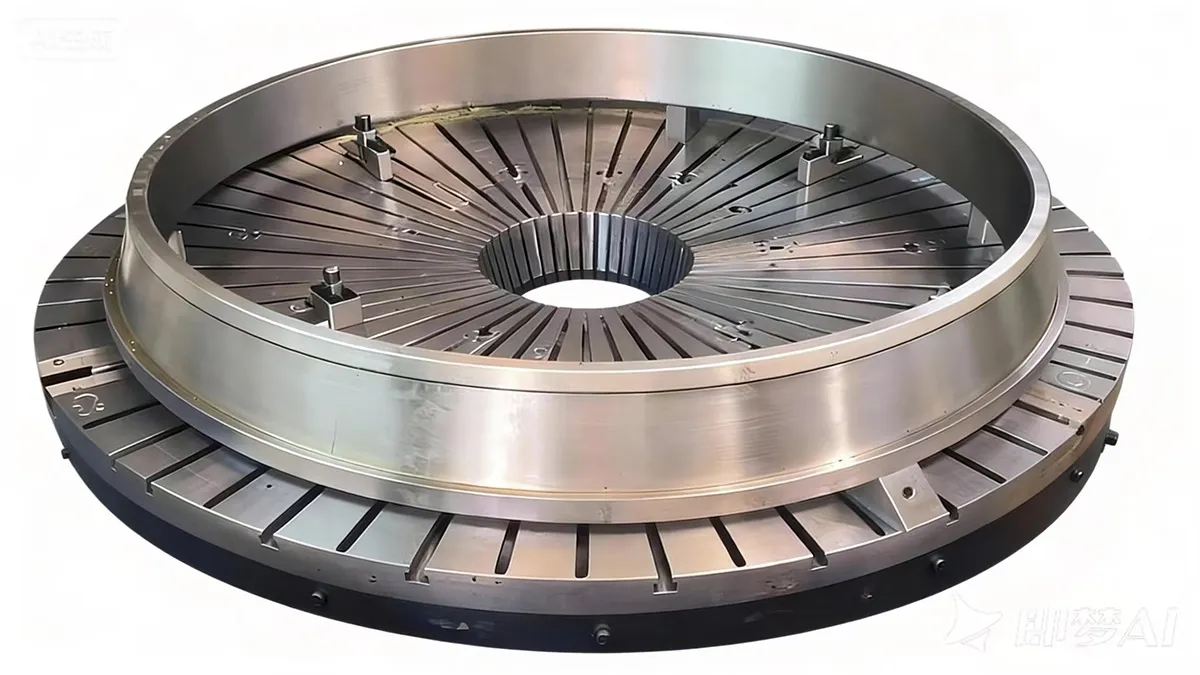
Large bearing rings (typically defined as having an inner diameter ≥ 100mm) are the critical load-bearing components of heavy-duty bearings. A complete set includes an inner ring and an outer ring, which support the rolling elements and guide rotation. These components must meet rigorous standards for roundness, cylindricity, and surface roughness. They are the backbone of heavy equipment, new energy (wind power), rail transit, and marine engineering.
Process Flow
Material Preparation
Soft Turning
Flaw Detection (NDT)
Heat Treatment
Face Grinding (or Hard Turning)
Hard Turning
Precision Grinding
Superfinishing (as required)
Key Process Solutions
Hard Turning
The Challenge
- Deformation & Tolerance: Large rings have strict requirements for runout and roundness. However, the heat generated during hard turning, combined with uneven clamping forces from traditional jaws, often causes thermal deformation and dimensional errors.
- Thin-Wall Instability: Many large bearing rings feature thin walls. The cutting force can distort the ring during machining; once the clamps are released, the ring "springs back," destroying the machined precision (roundness).
- Vibration (Chatter): Machining large diameters is prone to chatter (vibration marks), which ruins the surface finish and drastically reduces tool life. This demands exceptional machine rigidity.
- Tool Wear: With hardness levels between HRC 58–62, standard tools wear out rapidly, leading to high consumable costs and frequent downtime for tool changes.
Our Solution
Recommended Equipment: Vertical Precision Lathe
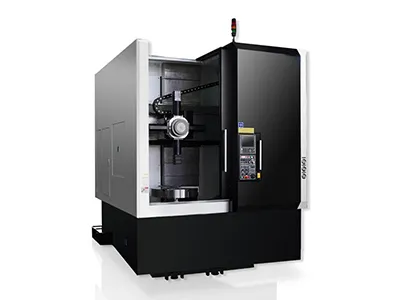
- Vertical Stability: The vertical layout uses gravity to help seat the large workpiece, improving stability compared to horizontal lathes.
- Clamping Innovation: The machine utilizes a hydraulic chuck with soft jaws for even force distribution. For sensitive thin-walled rings, it can be equipped with expansion mandrels or electro-permanent magnetic chucks to completely eliminate physical clamping distortion.
- Capability: Capable of roughing and finishing internal/external raceways, ribs, shoulders, and grooves in a single setup.
Recommended Cutting Tools: PCBN Cutting Tools (Tool Bits for Turning)
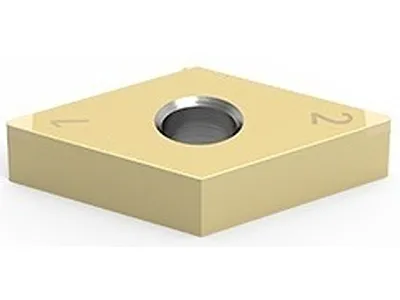
- Performance: High-grade PCBN tools provide the necessary wear resistance and impact strength to maintain consistent surface roughness on hardened steel, significantly reducing tool change frequency.
Superfinishing
The Challenge
- Process Synergy: Achieving the perfect "mirror finish" requires precise coordination of stone grit, pressure, feed rate, and oscillation frequency. On large surface areas, uneven stone wear can lead to uncontrolled roughness or waviness.
- Surface Consistency: Due to the large circumference, maintaining uniform contact pressure is difficult. This often results in "over-polishing" or "under-polishing" in different sectors, creating uneven residual stress distribution that affects bearing life.
- Clamping Distortion: Large rings are relatively flexible. If clamped too tightly, they deform; if too loose, they slip. Furthermore, any instability in the oscillation mechanism will transfer vibration marks to the raceway.
Our Solution
Recommended Equipment: Vertical Compound Superfinishing Machine
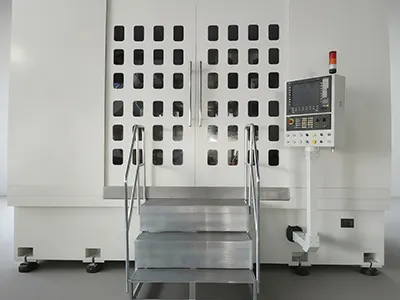
- Magnetic Holding: This machine features an electro-permanent magnetic chuck. By holding the ring magnetically rather than mechanically, it allows for distortion-free processing of the entire raceway.
- Micro-Cutting: Uses fine-grit oil stones to perform micro-cutting and polishing on raceways and grooves.
- Result: Improves the surface geometry and material fatigue life, preparing the bearing for heavy-duty operation.