
Precision Ball Screw Machining Solutions
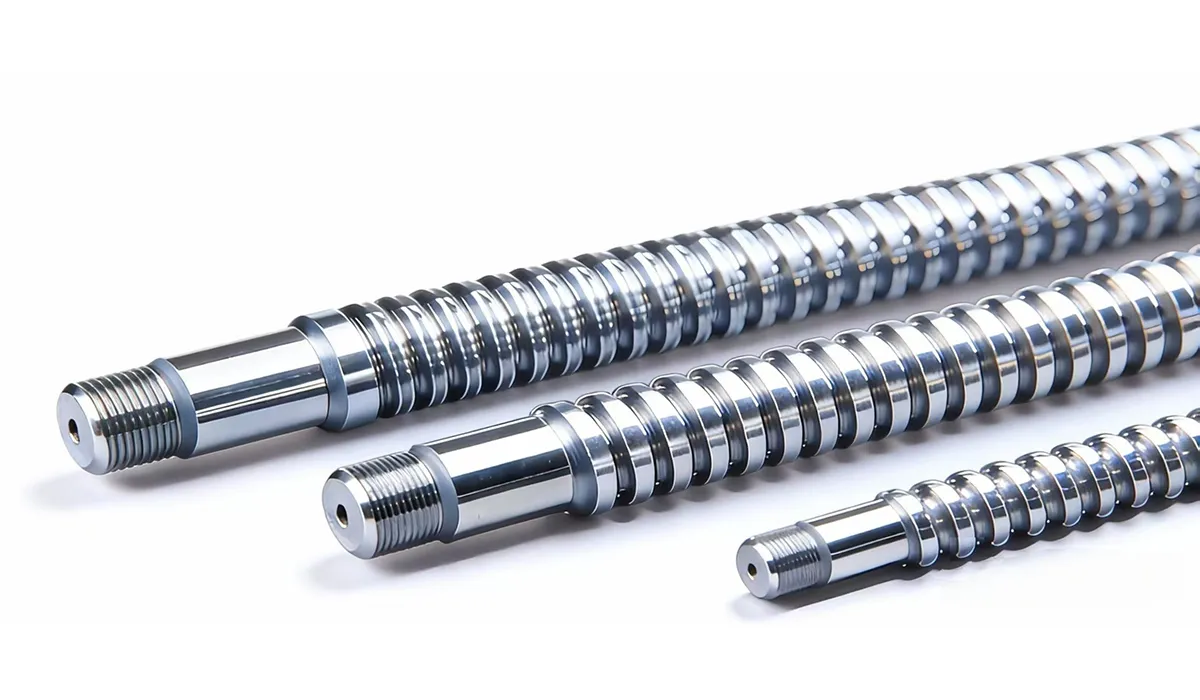
The ball screw is the "heart" of precision transmission. It acts as a high-efficiency mechanical drive that converts rotary motion into linear motion. By fundamentally replacing "sliding friction" with "rolling friction," ball screws achieve superior transmission efficiency, micron-level precision, and an extended service life. As a core functional component, they are indispensable in CNC machine tools, industrial robots, precision instruments, automotive manufacturing, and the aerospace industry.
Process Flow
Bar Stock Preparation
Soft Roughing
Induction Hardening
Straightening
Hard Whirling
Straightening
Precision Thread Grinding
Polishing
Key Process Solutions
Induction Heat Treatment
The Challenge
- Hardness: Uneven quenching depths in both circumferential and longitudinal directions lead to machining inconsistencies and lead deviations. Furthermore, insufficient tempering results in dimensional instability.
- Deformation Risks: Long, slender screws are highly prone to bending during quenching. Subsequent straightening induces residual stress, which gradually releases during long-term use, causing a loss of precision.
Our Solution
Recommended Equipment: Horizontal Induction Hardening Machine
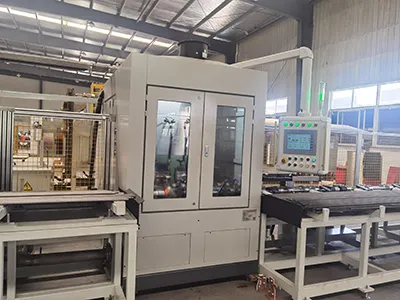
- Horizontal Layout: Specifically designed to accommodate long ball screw workpieces.
- Induction Heating: The machine inputs Medium or High-Frequency current to generate an alternating magnetic field. This induces eddy currents on the screw surface, causing it to rapidly heat to the quenching temperature (850–900°C).
- Precise Quenching: Immediate spray cooling transforms the surface into a high-hardness Martensite structure while the core retains its toughness. This ensures uniform heating even on complex raceway profiles.
Hard Whirling
The Challenge
- Precision Limitations: Traditional methods rely on multiple disjointed steps, leading to cumulative pitch errors that fail to meet the "micron-level" transmission demands of high-end equipment.
- Low Efficiency: A conventional workflow involves turning followed by multiple grinding passes. This is cumbersome and slow, with cycle times reaching 8–12 hours per screw, creating massive pressure on production delivery.
Our Solution
Recommended Equipment: Ball Screw Whirling Machine
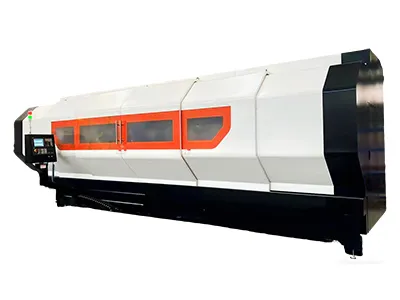
- Features a high-precision CNC system paired with custom PCBN tooling to perform hard whirling directly on heat-treated workpieces.
- Dry Cutting Capable: The process is stable and energy-efficient, capable of achieving a raceway surface roughness of Ra 0.4 μm in typical conditions without the need for coolant.
Recommended Cutting Tools: PCBN Tools (Tool Bits for Whirling)
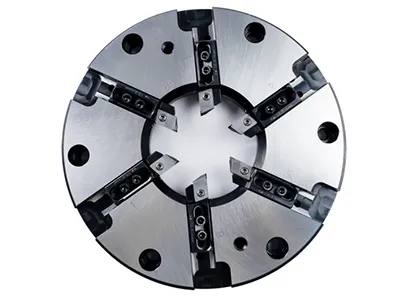
- We provide a variety of PCBN grades and edge structures designed for screws made of GCr15, 4150, and other materials heat-treated to HRC 58–62.
- Ensures high precision and dimensional consistency. Specialized PCBN grades are also available for difficult-to-cut materials like stainless steel.
Thread Grinding
The Challenge
- Workpiece Deformation: Long screws tend to sag or bend under the combined effects of gravity and cutting forces, compromising straightness.
- Thermal Instability: Heat generated during grinding causes thermal expansion. Precise control over cutting parameters and cooling is required to prevent errors.
- Surface Integrity: Achieving ultra-low surface roughness requires the rigorous selection of grinding wheels, parameters, and lubrication.
Our Solution
Recommended Equipment: CNC High Precision Thread Grinding Machine
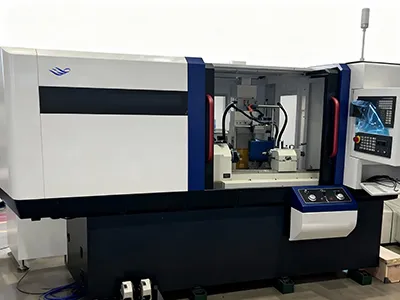
- Utilizes single-line or form grinding wheels to perform precision grinding along the screw’s helix.
- Delivers the perfect balance of high precision and high efficiency for final finishing.
Polishing
The Challenge
- Maintaining Precision: Poor polishing can inadvertently alter the thread lead and tooth profile accuracy.
- Surface Inconsistency: It is difficult to uniformly polish the root, crest, and flanks, leading to scratches, micro-cracks, or uneven roughness.
- Efficiency vs. Accuracy: Manual polishing is slow and inconsistent, while improper mechanical polishing generates heat that affects the screw's rigidity and lifespan.
- Complex Geometries: Polishing is complicated by variable lead angles, helix lifts, and special specifications like large leads or fine threads.
Our Solution
Recommended Equipment: Vertical Polishing Machine
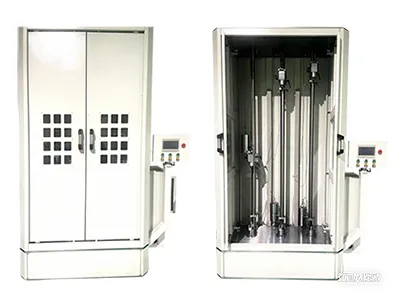
- Uses an elastic polishing head that performs both polishing and lapping.
- Automatically matches the screw’s lead and helix angle to ensure uniform polishing across the tooth flank and crest.
Recommended Cutting Tools: Flexible Polishing Head
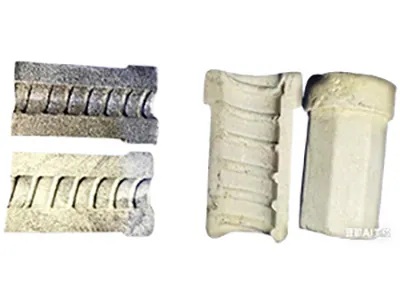
- Custom-fitted to different thread profiles to avoid damaging the tooth shape.
- Particularly effective for fine-pitch and non-standard screws.